
What used to be a niche device for file backups has now become the backbone of modern digital life. Today’s NAS systems power home media libraries, private clouds, remote work environments, and even local AI applications. As a result, the market has become more diverse—and more confusing—than ever.
Many buyers quickly realize that comparing specifications alone is not enough. Two devices with similar hardware can deliver completely different experiences depending on software, ecosystem, and long-term scalability. This guide is designed to help you cut through that complexity and make a confident, future-proof decision.
What is a NAS?
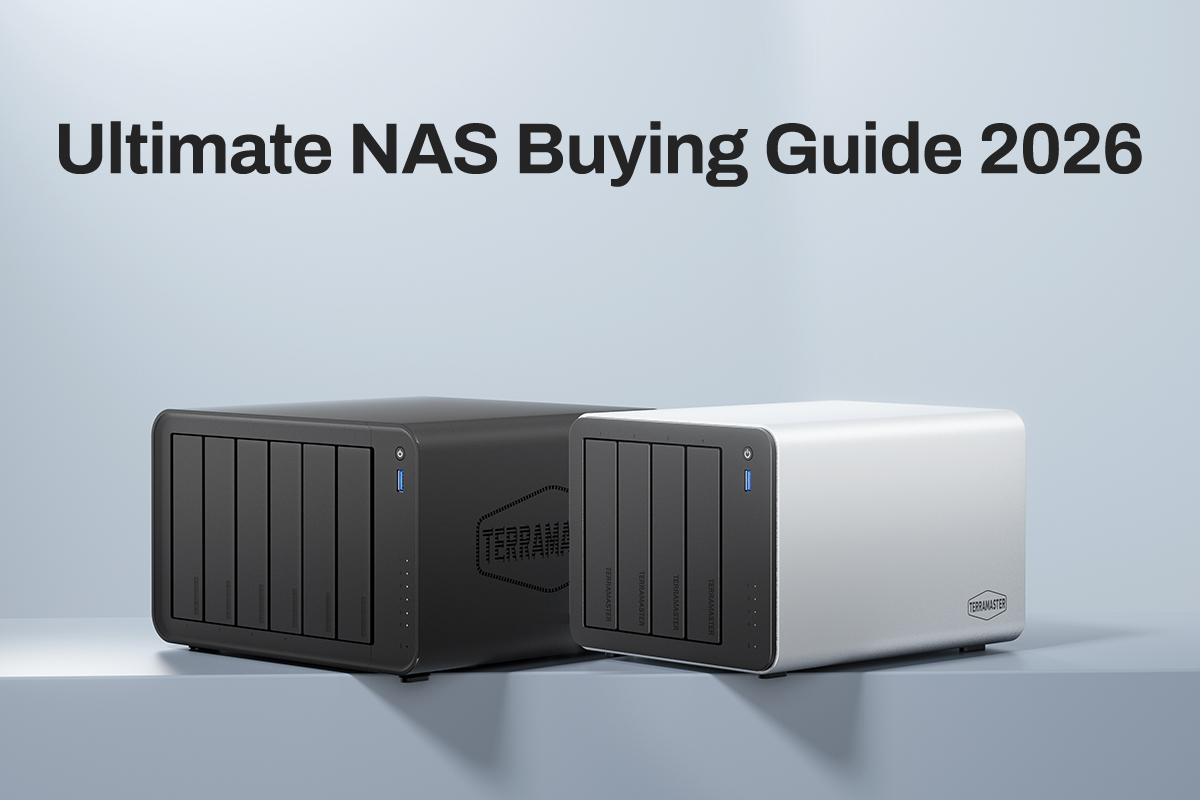
A NAS (Network Attached Storage) is essentially your personal cloud server.
Instead of relying on third-party cloud services, a NAS allows you to store, manage, and access your data from anywhere while keeping full control over privacy and ownership. At its simplest, it replaces external drives and scattered storage with one centralized system.
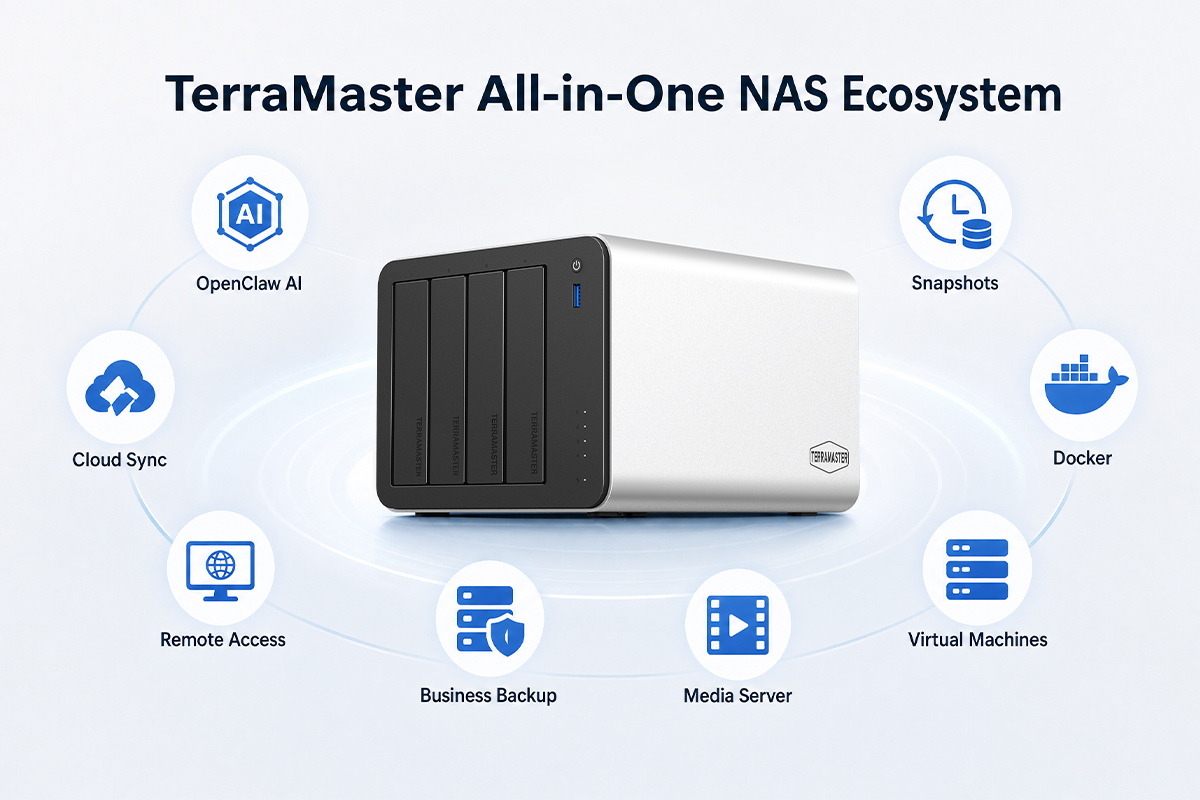
However, modern NAS devices go far beyond basic storage. They can host media servers like Plex or Jellyfin, run Docker applications, manage automated backups, and even support virtual machines. In many cases, a NAS becomes a small home server that powers multiple digital workflows at once.
This evolution is exactly why choosing the right NAS in 2026 requires a broader perspective than it did in the past.
How Many Bays Do You Need?
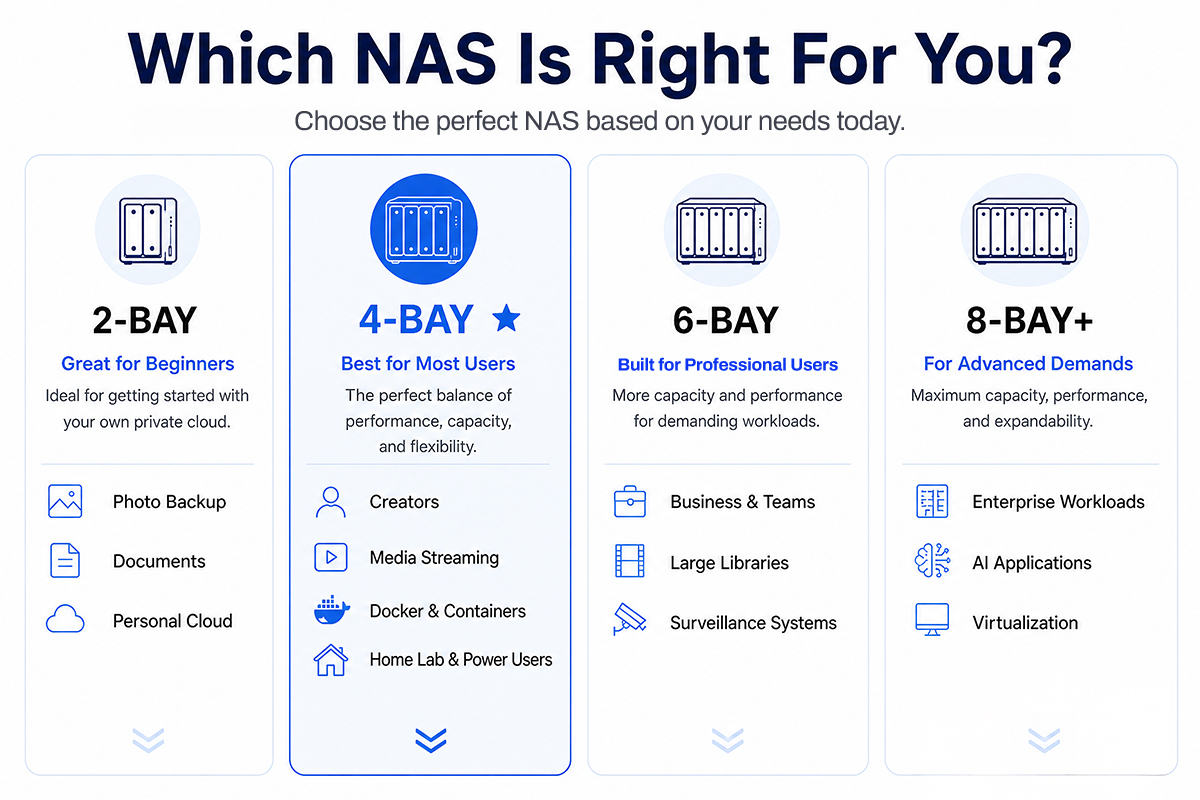
A 2-bay NAS is often attractive for beginners because of its lower entry cost. It works well for basic photo backups, document storage, and light media streaming. However, storage needs tend to grow faster than expected, and many users eventually find themselves constrained by limited expandability.
A 4-bay NAS has become the most popular choice for home users and creators because it offers a better balance between capacity, redundancy, and future scalability. It allows for more flexible RAID configurations and provides room to grow without immediately replacing the system.
For users dealing with large media libraries, surveillance data, or business workloads, 6-bay or larger systems provide even greater headroom, though they are typically more than what most households require.
ARM vs x86
Another critical decision point is processor architecture.
ARM-based NAS systems are generally more affordable and energy-efficient, making them suitable for lightweight workloads such as basic file sharing or backup tasks. However, they can be limiting when it comes to more advanced use cases.
x86-based NAS systems, on the other hand, offer significantly greater flexibility. They are better suited for Docker containers, virtualization, multimedia processing, and emerging AI workloads. As NAS usage continues to expand beyond storage into computing, x86 platforms have become the preferred choice for users who want long-term versatility.
In 2026, many buyers are not just purchasing storage—they are investing in a small home server. This shift makes architecture choice more important than ever.
What Features Matter Most in 2026?
Beyond hardware, the real value of a NAS is defined by its software ecosystem and capabilities.
The most important features today include:
- Snapshot-based data protection
- Docker and container support
- Virtual machine management
- Remote access and cloud sync
- Automated backup tools
- AI application support and extensibility
Why TerraMaster Is One of the Best NAS Choices in 2026
The NAS market in 2026 is highly competitive, with several established players offering strong ecosystems and specialized advantages. However, product selection increasingly comes down to a balance between performance, openness, and value.
TerraMaster has positioned itself strongly in this middle ground.
Rather than focusing solely on ecosystem lock-in or premium branding, TerraMaster emphasizes hardware value and flexibility. Many of its systems use Intel x86 processors, support modern networking standards, and offer expandability typically found in higher-priced segments.
At the same time, the software platform has matured significantly. TOS now includes essential NAS features such as backup management, snapshot protection, Docker support, and virtualization tools, allowing users to build both simple and advanced setups depending on their needs.
In addition, TerraMaster is actively adapting to the next major shift in storage technology: AI integration. With platforms like OpenClaw, users can deploy AI applications directly on their NAS, transforming it from a passive storage device into an active data and knowledge system.
For users who prioritize performance, flexibility, and long-term value without paying a premium for branding, TerraMaster stands out as one of the most practical NAS choices available in 2026.
Key strengths include:
- Competitive pricing across product lineup
- Strong use of Intel x86 platforms
- Docker and virtualization support
- Expanding software ecosystem (TOS)
- Business backup solutions
- Emerging AI capabilities through OpenClaw
Selecting a NAS is ultimately not about choosing the most powerful device on paper, but about selecting a system that will continue to meet your needs as they evolve.
Storage requirements grow. Workloads become more complex. AI and automation continue to reshape how data is used.
For users seeking a balance of capability, scalability, and value, TerraMaster remains one of the most practical and compelling choices in the current NAS landscape.